For Property developers
Development is not the same as brokerage — but every sale still needs a clean KYC, cash and evidence hand-off.
Own-stock sales, off-plan projects and build-to-demand deals often sit beside AML touchpoints without making the developer an estate-agent obliged entity by default.
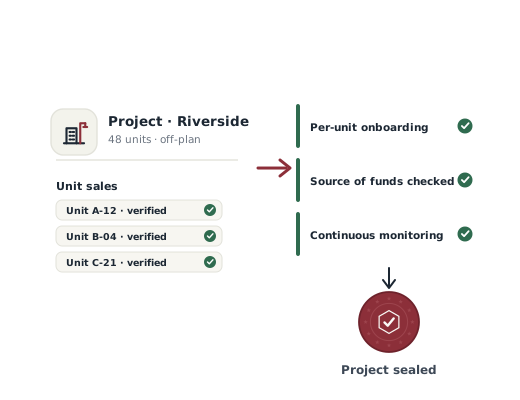
Why it matters
Own-stock sales, off-plan projects and build-to-demand deals often sit beside AML touchpoints without making the developer an estate-agent obliged entity by default.
Where the scope gets real
For developers, the honest boundary matters. Selling your own stock is generally evidence/support mode; registered estate-agent activity, third-party brokerage, a separate intermediation arm or suspicion can bring a file into AMLR real-estate scope.
Where teams lose time
That still leaves real operational work: banks and notaries ask for structured client facts, sanctions comfort, payment explanations, source-of-funds evidence and a record that cash or unusual payment structures were handled properly.
Typical files and mandate types
- Off-plan apartment sales where the notary or bank asks for clear buyer evidence
- Mixed groups with a development company and a separate estate-agent or sales brokerage arm
- Deals where a buyer, payment route or cash expectation creates suspicion even if the project is own stock
What Sceau does
- Developer support mode for own-stock and off-plan projects
- Full real-estate gate when brokerage or suspicion applies
- Notary/bank KYC hand-off evidence without pretending Sceau replaces legal judgment
What usually goes wrong
- Marketing own-stock sales as if they were always AMLR estate-agent files
- Missing evidence when the notary or bank asks why a buyer was accepted
- A brokerage or intermediation arm being treated like ordinary development
How Sceau works in practice
- Classify the deal as own-stock support mode, registered-agent activity, third-party brokerage or suspicion override
- Store buyer evidence, sanctions screening, cash-control notes and notary/bank hand-off evidence in one file
- Escalate to the full real-estate CDD gate when intermediation or suspicion makes that appropriate
What changes operationally
- Developers avoid overclaiming legal status while still keeping a defensible evidence trail
- Brokerage files are not lost inside ordinary project sales
- The notary, bank and internal team see the same clean record
What stays under your control
Sceau keeps developer files in the right lane. Own-stock files become notary/bank KYC hand-off records; brokerage or suspicious files move into the full real-estate gate with both sides, accepted-offer timing and transfer evidence.
See it for your office
Book a 30-minute demo: we onboard a test client live, trigger a screening hit, and export your first inspection pack — your profession, your country, your supervisor.
Book a demo